Best Lube for Postpartum Sex
(If Sex Hurts After Baby, Start Here)

Not in the mood to research right now? Start here.
If postpartum sex feels uncomfortable, rushed, or awkward, these are the three lubricants I consistently recommend to coaching clients who want comfort without disrupting their body’s natural balance:
Best Water-Based (to use with condoms & toys):
👉 Almost Naked by Good Clean Love
Best Long-Lasting Silicone-Based:
👉 Sliquid Organic Silk
Best Natural Oil-Based Option:
👉 Cocolube Spray & Play
But before we talk about lube, we need to talk about something really important.
Why Vaginal Dryness Happens After Birth
Your cervix and Bartholin glands secrete natural lubrication when you are aroused. However, postpartum hormones — especially if you are breastfeeding — can lower estrogen levels, which causes vaginal dryness and thinner vaginal tissue. According to Healthline, Estrogen and progesterone levels soar while you’re pregnant. Instead of being discarded, the uterine lining develops into a placenta. This is why you might feel:
Dry
Tight
Irritated
Painful
Like your body forgot how to do this
Hormones can take up to a year to regulate after birth (and longer if breastfeeding). So there should be zero shame in needing lubrication for postpartum sex. The overall postpartum recovery timeline varies so it’s silly to compare to anyone else.
Using lube is not a failure.
It’s a tool.
Related: Postpartum Sex Drive
Tips for Increasing Natural Lubrication After Baby
Lubricant helps, but we also want your body working with you.
To increase natural lubrication:
Increase foreplay time (this matters more postpartum than ever)
Go slower than you think you need to
Use external stimulation first
Try positions where you control depth and speed
Consider pelvic floor therapy if sex is painful
Reduce pressure — pain and pressure shut arousal down fast
Also, very important:
If you are feeling touched out, exhausted, resentful, or disconnected from your partner, your body may not feel safe or ready for sex yet — and that’s not just a physical problem.
Read next: Touched Out: What Your Nervous System Is Trying to Tell You
Also read: Understanding Your Postpartum Sex Drive
These two posts explain the emotional and nervous system side of postpartum intimacy.
The Main Types of Lubricants to Use for Sex After Birth
When looking for lubricants there are three main types to choose from:
Water-based lubricant
Silicone-based lubricant
Oil-based lubricant
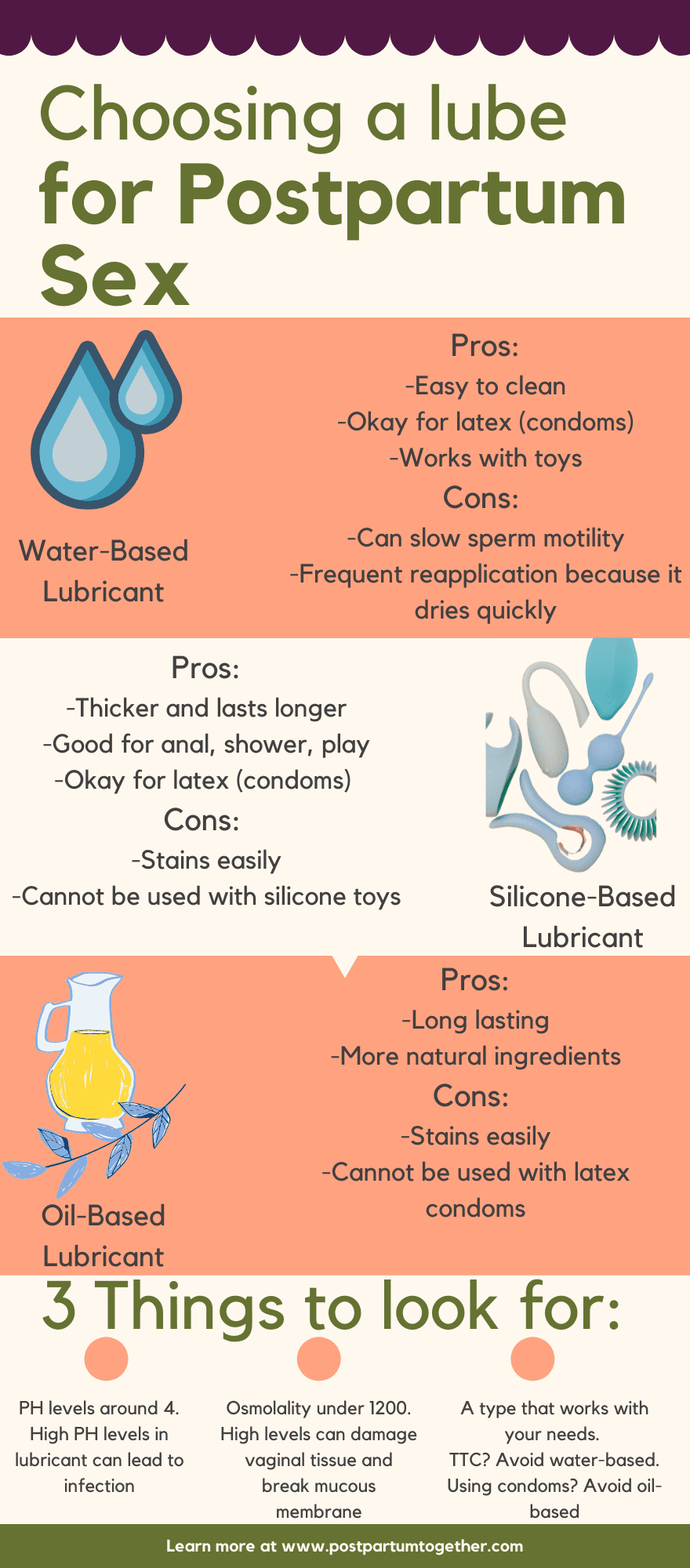
Water-Based Lubricant (Most Versatile Option)
Water-based lubricant is common and can be found at grocery and drug stores. This lubricant works with latex condoms and toys, making it a versatile choice.
However, glycerin added to many water-based lubricants can disrupt vaginal pH and increase the risk of yeast infections. It can also slow sperm motility, so it is not recommended if you are trying to conceive.
Pros:
Doesn’t stain
Safe with condoms
Safe with toys
Easy to clean
Cons:
Dries quickly
May need reapplication
Some brands disrupt vaginal pH
Recommended water-based lubricant: Almost Naked from Good Clean Love
Silicone-Based Lubricant (Best for Painful Sex)
Silicone-based lube lasts longer and is thicker, which can be very helpful if sex is painful postpartum.
It is great for:
Pain with penetration
Shower sex
Long sessions
When you don’t want to keep reapplying
Pros:
Long-lasting
Thicker
Good for painful sex
Safe with condoms
Cons:
Can stain sheets
Not compatible with silicone toys
If you want something that lasts without reapplying:
Sliquid Organic Silk
If sex hurts, this is usually the one I suggest starting with.
Oil-Based Lubricant
Oil-based lubricants include coconut oil, olive oil, avocado oil, and vitamin E oil.
Important: Oil breaks down latex condoms, so do not use oil-based lube if you are using condoms.
Pros:
Long-lasting
Natural ingredients
Smooth feeling
Cons:
Not safe with condoms
Can stain sheets
May cause infections for some women
Recommended oil-based lubricant: Cocolube Spray and Play
pH Levels and Osmolality (Why Some Lubes Make Dryness Worse)
Quick version:
Your vagina naturally sits at a slightly acidic pH (around 3.5–4.5). Many popular drugstore lubricants have a much higher pH, which can:
Increase dryness over time
Cause irritation
Increase risk of infection
What to look for in a postpartum lubricant:
pH close to 4
Glycerin under 20%
Osmolality under 1200 mOsm/kg
The World Health Organization has actually published guidance on lubricant osmolality because high osmolality can damage vaginal tissue and make dryness worse over time.
This is why I default to recommending:
Because they tend to work with your body, not against it.
Osmolality:
Osmolality is defined as "the concentration of a solution expressed as the total number of solute particles per kilogram." When it comes to lubricant, high osmolality can actually work against your body, promoting vaginal dryness. This is because high levels can damage vaginal tissue and break down mucous membrane.
Learn about osmolality from the WHO website:
Most commercial personal lubricants have high osmolalities (2000–6000 mOsm/kg). Table 1 summarizes data on a wide range of current commercial products (16). By comparison, the normal osmolality of female vaginal secretions is 260–290 mOsm/kg and in human semen it is 250–380 mOsm/kg (17, 18). Ideally, the osmolality of a personal lubricant should not exceed 380 mOsm/Kg to minimize any risk of epithelial damage. Given that most commercial lubricants significantly exceed this value, imposing such a limit at this time could severely limit the options for sourcing personal lubricants for sector procurement. It is therefore recommended on an interim basis that procurement agencies should source lubricants with osmolalities not greater than 1200.
Best Lube for Postpartum Sex Summary
When returning to sex after baby, you want to prioritize:
Comfort
Healing
Hormones
Libido
Emotional connection
Vaginal dryness
Quick guide:
Using condoms or toys → Water-based
Painful sex or dryness → Silicone-based
Want natural option and not using condoms → Oil-based
The right lubricant can take pressure off both of you and make connection feel doable again.
If Postpartum Sex Feels Emotionally Complicated, Not Just Physical
Most couples don’t struggle because they don’t care.
They struggle because:
They’re exhausted
They don’t know how to talk about sex anymore
One person feels pressure
One person feels rejected
Both people feel awkward
And nobody knows how to restart
If this post helped you physically, the next step is the emotional and relationship side of intimacy.
Read next:
Or if you want guided help having these conversations and rebuilding intimacy without pressure:
Work With Us — Intimacy & Connection Support
You don’t have to figure this out alone.
If You’re Not Sure How to Restart Intimacy, Start Here
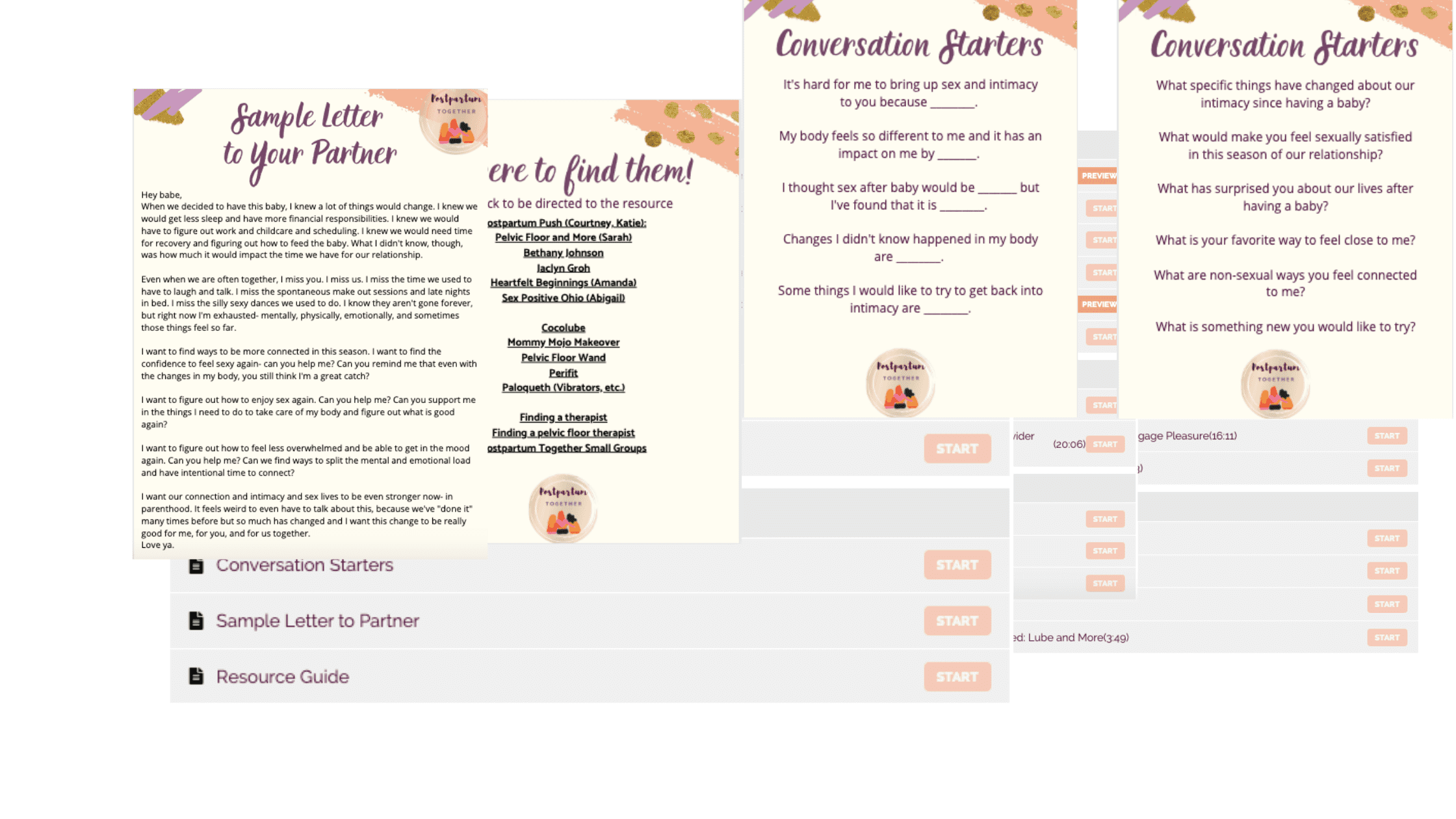
Lube can help with the physical part of postpartum sex, but most couples quickly realize there’s an emotional and communication side to this too. If you feel like you and your partner don’t quite know how to restart intimacy, talk about desire, or navigate this new season without hurt feelings or pressure, that’s exactly why we created the Reconnection Kit. It gives you a simple, non-awkward way to start these conversations and rebuild connection at your own pace.
Postpartum Lube FAQ
Is it normal to need lube after having a baby?
Yes. Very normal. After birth, estrogen levels drop — especially if you are breastfeeding — which can cause vaginal dryness and thinner vaginal tissue. This can make sex feel dry, tight, or painful. Many women need lubricant for months postpartum, and some need it for the entire time they are breastfeeding.
How long will I need lube postpartum?
It depends on hormones, breastfeeding, healing, stress, and sleep. Some women need lubricant for a few months, while others need it for a year or longer. If you are breastfeeding, dryness often improves when breastfeeding decreases or stops because estrogen levels rise again.
What type of lube is best for postpartum sex?
It depends on your situation:
Water-based lube → best if using condoms or toys
Silicone-based lube → best for painful sex or severe dryness
Oil-based lube → best for a natural option (but not safe with condoms)
Many postpartum women prefer silicone-based lubricants at first because they last longer and reduce friction more.
Why does sex hurt after having a baby even if I use lube?
Research shows postpartum sexual problems are very common, especially lubrication issues, low desire, and pain.
Painful sex postpartum is common and can be caused by:
Vaginal dryness from low estrogen
Scar tissue from tearing or an episiotomy
Pelvic floor tightness
Fear or anticipation of pain
Not enough arousal time
Feeling touched out or emotionally disconnected
If sex is consistently painful, seeing a pelvic floor physical therapist can make a huge difference.
Is lube safe to use postpartum?
Yes, but choose one that supports your vaginal health. Look for:
pH around 3.5–4.5
Low glycerin
Osmolality under 1200 when possible
No warming or flavored additives (these often cause irritation)
This is why many postpartum professionals recommend body-friendly lubricants instead of typical drugstore brands.
Can I use coconut oil as lube postpartum?
You can, but there are a few things to know:
Coconut oil breaks down latex condoms
It may increase risk of yeast infections for some women
It can stain sheets
Some people are sensitive to it
Some women love it, others don’t — it depends on your body.
When should I see a doctor about painful postpartum sex?
Talk to your OB, midwife, or a pelvic floor therapist if:
Pain is sharp or burning
Pain does not improve with lube
You feel tightness or like something is “blocked”
You have bleeding with sex
You feel anxious or fearful about penetration
Sex is still very painful after several months
Pain is common postpartum, but you should not have to just “push through it.”
What if I’m just not in the mood for sex after baby?
That is also very normal. Postpartum libido is affected by:
Hormones
Sleep deprivation
Breastfeeding
Mental load
Relationship stress
Feeling touched out
If this is you, read next:
Because postpartum intimacy is not just physical — it’s emotional and relational too.