What Is the Invisible Load in Motherhood? (And Why It Feels So Heavy)
If you’ve ever thought:
“Why am I the only one who notices everything?”
“Why does it feel like I’m always ‘on’?”
“Why am I so tired even when I didn’t ‘do that much’ today?”
You’re not imagining it.
You’re carrying the invisible load.
And for a lot of moms, it’s one of the biggest reasons behind:
burnout
resentment
mental exhaustion
feeling unseen in your own home
Let’s put language to what’s actually happening.
What Is the Invisible Load?
The invisible load is the mental, emotional, and logistical work required to run a home and care for a family most of which goes unseen.
It’s not just what you do.
It’s everything you’re:
thinking about
tracking
remembering
anticipating
holding together behind the scenes
It’s the reason things don’t fall apart.
And because it’s invisible…
It often goes unrecognized.
Invisible Load vs. Mental Load (What’s the Difference?)
These two terms are closely related, but slightly different.
Invisible load is the experience:
👉 “I feel like I’m carrying everything and no one sees it.”
Mental load is the mechanics:
👉 The planning, organizing, and managing behind daily life.
If you want a deeper breakdown of how the mental load works in relationships, start here:
Mental Load in Motherhood and Marriage: What It Is + How to Share It Better
Most moms are carrying both.

What the Invisible Load Actually Looks Like
It’s not always obvious.
It looks like:
Knowing when the diaper bag needs restocked
Remembering which kid likes which snack
Tracking appointments and schedules
Anticipating when shoes won’t fit anymore
Planning meals before anyone asks what’s for dinner
Managing the emotional tone of the home
Thinking three steps ahead at all times
It’s the constant background processing.
Like having 50 tabs open in your brain… all day long.
Why the Invisible Load Feels So Heavy
It’s not just the amount of work.
It’s the type of work.
1. It never fully turns off
Even when you’re “resting,” your brain is still tracking what’s next.
2. There’s no clear finish line
You don’t get to feel “done” at the end of the day.
3. It’s often unrecognized
If no one sees it, it can feel like it doesn’t count.
4. It’s tied to identity
Many moms feel like they should be able to handle it all.
So instead of questioning the load…
they question themselves.
Why Moms Carry More of the Invisible Load
This isn’t random.
It’s a mix of:
Social conditioning
Default parenting roles
Workplace expectations
Relationship dynamics
Internal pressure to “be on top of everything”
Even in relationships where both partners are involved…
One person often becomes the default manager.
And once that pattern is set, it’s hard to break without intention.

The Emotional Impact No One Talks About
The invisible load doesn’t just make you tired.
It creates:
Resentment (“Why am I the only one thinking about this?”)
Disconnection (“I don’t feel like we’re a team”)
Mental exhaustion (“I can’t keep track of anything else”)
Guilt (“I shouldn’t feel this frustrated”)
And over time, it can shift the relationship dynamic into:
👉 manager vs. helper
instead of
👉 partners
Signs You’re Carrying Too Much Invisible Load
You’re the one who always notices what needs to be done
You feel like you have to “stay on top of everything”
You mentally prepare for things before they happen
You feel anxious when you try to relax
You delegate, but still feel responsible
You feel resentful… but also guilty for feeling that way
If that’s you, this isn’t a personal failure.
It’s a pattern.
What Actually Helps (Without Overhauling Your Whole Life)
You don’t need to fix everything overnight.
But here are a few starting points:
1. Start naming it
You can’t shift what you can’t see.
Even saying:
👉 “I think I’m carrying the invisible load right now”
is a powerful step.
2. Make the invisible visible
Write down what you’re managing.
Most people (including your partner) don’t realize the full scope until they see it.
3. Shift from helping → ownership
Instead of:
“Can you help with this?”
Move toward:
“This is yours to fully own.”
4. Let go of full control
This one’s hard.
But shared responsibility requires space for different approaches.
5. Have one honest conversation
Not everything at once.
Just one place where things feel heavy.
If This Is Affecting Your Relationship
If you’re feeling:
disconnected
resentful
stuck in the same conversations
You’re not alone.
And it’s not just about chores.
It’s about how you function as a team.
This is exactly the work we do inside our coaching and programs—helping couples:
make the invisible visible
rebalance responsibilities
rebuild connection
→Prep for Us (Expecting couples) Back to Us (Current Parents)
FAQs About the Invisible Load
What is the difference between mental load and invisible load?
They’re often used interchangeably, but both refer to the unseen planning, tracking, and emotional work behind running a home.
Why do moms carry more of the invisible load?
Social conditioning, default roles, and learned expectations often lead women to take on more mental and emotional responsibility.
Can the invisible load affect your mental health?
Yes. Chronic mental load is linked to anxiety, burnout, and emotional exhaustion.
How do I explain the invisible load to my partner?
Start by writing it out. Seeing the full picture makes it easier to have a clear, productive conversation.
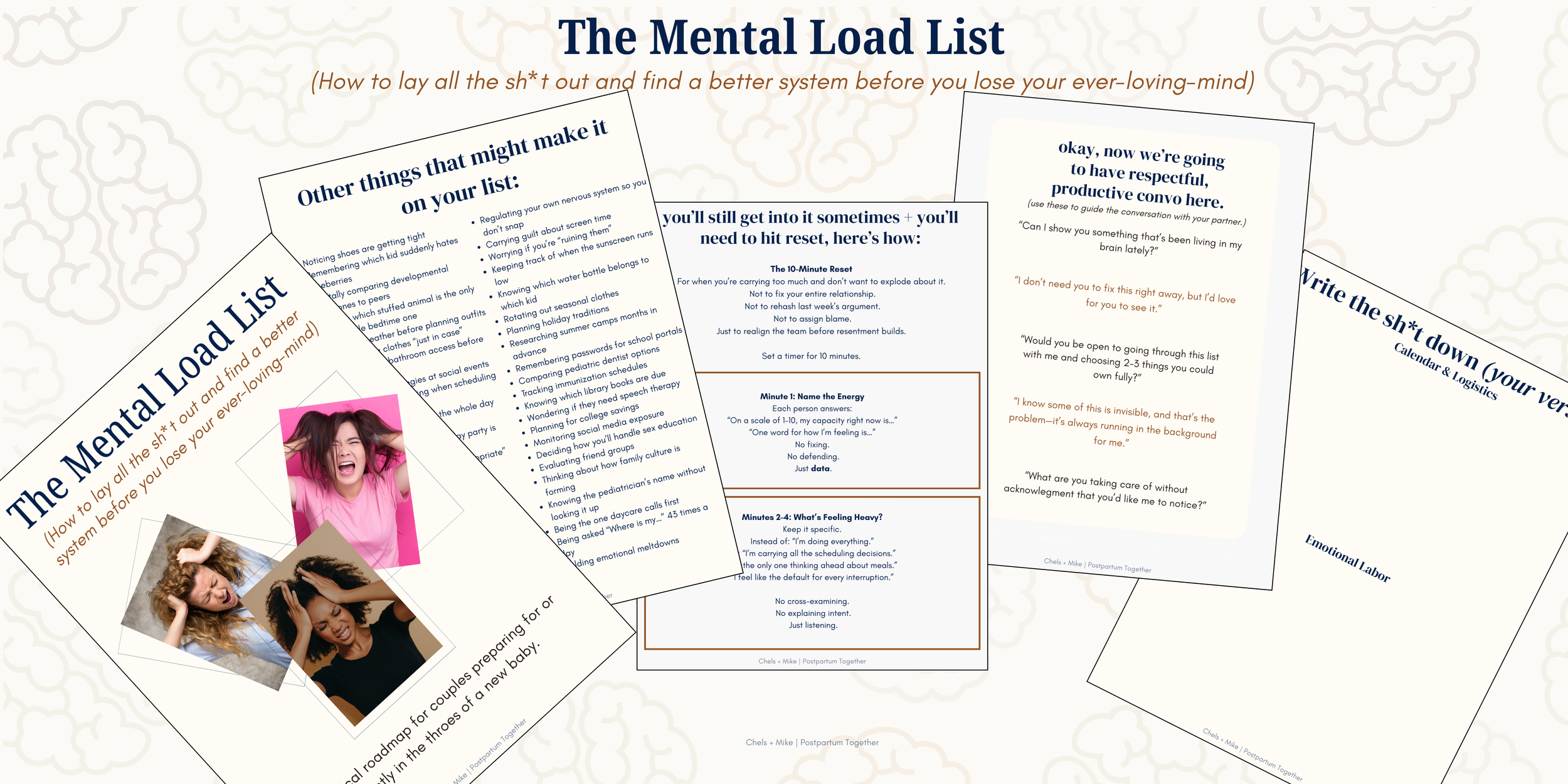
→ Start with our easy Mental Load Bundle for Couples
If no one else has told you this lately: You’re doing a lot. It makes sense that you’re tired. You’re not broken — you’re carrying the weight of things that are meant to be shared.
The invisible load isn’t a you problem. It’s a cultural, systemic, and relational one. But naming it is the first step to changing it.